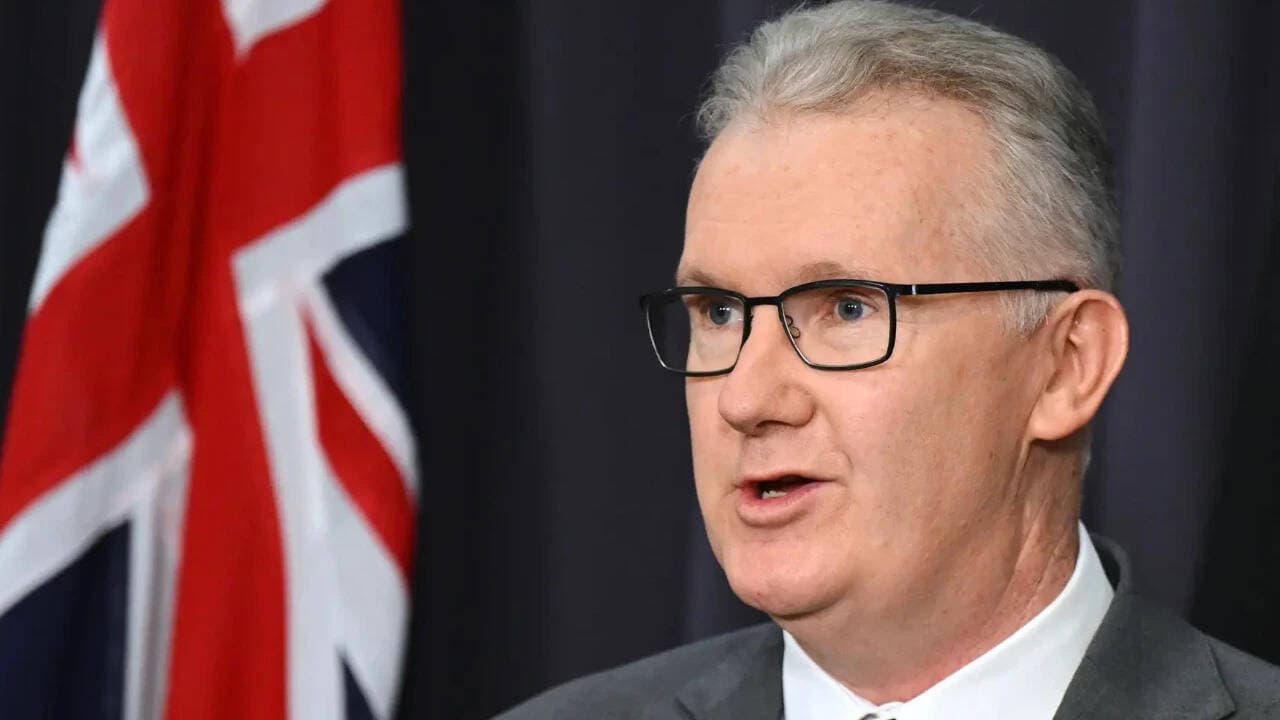
Australian Immigration Minister Tony Burke has moved to clarify the government's stance on migration, addressing concerns over labor shortages and the integrity of the visa system. Speaking at the National Press Club, Burke emphasized that while the government values the economic contributions of migrants, it is prioritizing stricter oversight of a system that has historically been driven by high demand.
Addressing recent political criticism, Burke refuted claims that the government is prioritizing the entry of yoga teachers over construction workers. He specifically challenged remarks made by Shadow Housing Minister Senator Bragg, stating, "There is an endless refrain that the government is bringing in yoga teachers and not construction workers, to the extent that the shadow minister for housing, Senator Bragg, has even said we are bringing in more yoga teachers than construction workers." According to the minister, the government has tripled the intake of construction workers to nearly 15,000 in the last financial year, while the number of yoga teachers admitted under the current administration is zero.
Burke explained that yoga instructors remain on the occupation list due to a 2022 trade agreement with India, which was negotiated by the previous government. The Australia–India Economic Cooperation and Trade Agreement, which took effect in December 2022, allows for up to 1,800 Indian yoga instructors and traditional chefs to enter the country annually as contractual service suppliers. Burke attributed the initial agreement to former assistant trade minister Dan Tehan.
Regarding the broader issue of "visa hopping," where international students transition between courses to extend their stay rather than pursue education, Burke outlined new regulatory expectations. While legitimate academic progression—such as moving from a bachelor's to a master's degree—will remain supported, the government intends to curb repetitive course changes designed solely to prolong residency. "It eventually becomes absurd to not just let them stay, because at that point they have Australian citizen children and at that point they are so integrated into a local community," Burke noted regarding the complexities of long-term visa transitions.
Government data indicates that Indian students represented 16% of Australia's international student population in the first five months of 2026, trailing China at 23%. These policy shifts are expected to have a significant impact on the Indian diaspora. Furthermore, Australia is implementing changes to restrict international students and graduate visa holders from bringing family members into the country. These rules will include exemptions for PhD students and those from specific Pacific and ASEAN nations, though India is not included in these categories. Burke confirmed that families currently residing in Australia will not be separated by the new measures.