
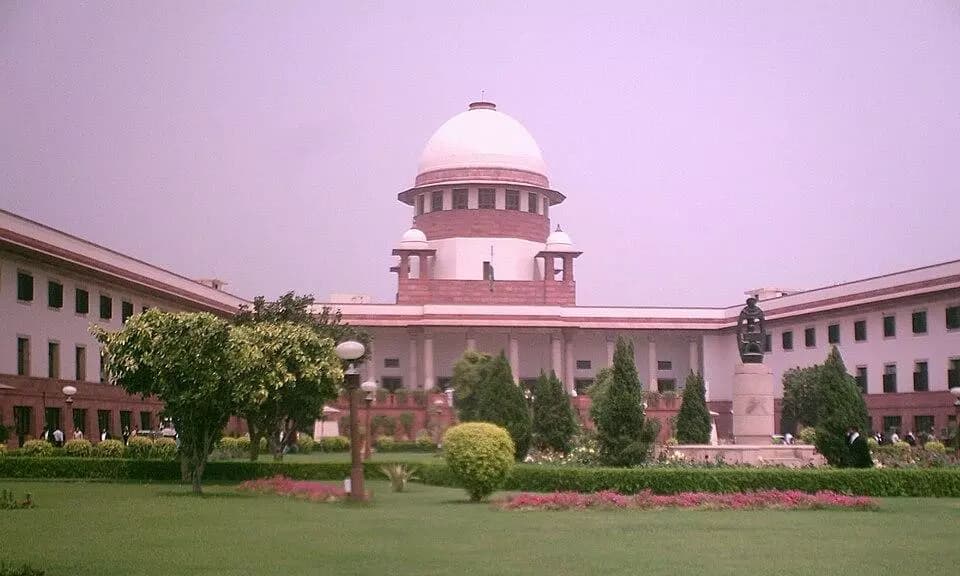
The Supreme Court on Thursday granted a stay on the execution of a death sentence handed down to an Indian Mujahideen operative convicted for his role in the 2008 Ahmedabad serial bomb blasts. A bench comprising Justices Vikram Nath, AG Masih, and Sandeep Mehta issued a notice to the Gujarat government regarding the appeal filed by the convict, Ahmed Bawa, also known as Abbu Abubakar Barelvi. The court has also ordered the production of trial court records.
During the proceedings, Solicitor General Tushar Mehta emphasized the gravity of the case. The appeal challenges a July 7 Gujarat High Court ruling that upheld the death sentences of 38 Indian Mujahideen members, including Barelvi, for the terror attack that resulted in 56 deaths and left over 200 people injured. On July 26, 2008, a series of 21 explosions occurred across Ahmedabad within a 70-minute window, including blasts targeting hospitals where victims were receiving care.
In its July verdict, the High Court affirmed the February 2022 decision of a special court, which had sentenced 38 individuals to death and 11 others to life imprisonment. The High Court justified the capital punishment by citing the massive scale of the conspiracy, the intent to incite widespread terror, and the lack of remorse shown by the convicts. The court noted that the perpetrators' actions demonstrated a remorseless mindset, further evidenced by their conduct during incarceration.
Regarding the 11 convicts sentenced to life imprisonment, the High Court determined that the prosecution had successfully proven their roles in providing logistical support, such as procuring materials for the bombs and arranging shelter for other conspirators, as well as their participation in terror training camps in Gujarat and Kerala. The court also mandated that the Gujarat government provide compensation of Rs 10 lakh to the families of the deceased and Rs 5 lakh to those who sustained grievous injuries by March 30, 2027.
The case involved 78 individuals who faced trial after 35 separate police cases were consolidated. Among those convicted is Safdar Nagori, a former leader of the banned Students Islamic Movement of India (SIMI). The special court's 2022 ruling was notable for being the first instance in India where 38 convicts were sentenced to death in a single case, surpassing the 1998 TADA court verdict that sentenced 26 individuals to death for the assassination of former Prime Minister Rajiv Gandhi.

