
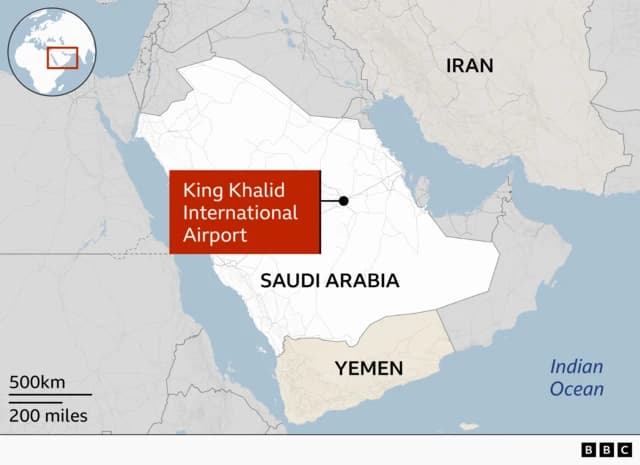
Yemen's Houthi rebels have warned airlines and passengers to avoid Saudi Arabian airports and airspace following a deadly attack on Riyadh's King Khalid International Airport. Saturday's strike killed 12 people and injured more than 300, prompting Saudi authorities to temporarily suspend operations at the facility to conduct safety inspections. The Iran-backed group has intensified its campaign against Saudi infrastructure, leading to widespread flight cancellations and delays across the region.
International reactions have been swift, with the United Nations, the European Union, and several nations condemning the assault as a violation of international law and a threat to regional stability. Embassies, including those of the United States and the United Kingdom, have issued urgent travel warnings, advising citizens to avoid major Saudi airports and exercise extreme caution. The UK government has indicated it may potentially increase support for Saudi Arabia, while the US has suggested it could participate in offensive strikes.
Security analysts suggest the Houthi strategy aims to amplify psychological and economic pressure on the Kingdom by targeting its aviation sector. The escalation follows a series of recent strikes on Saudi airports and oil facilities, further straining a region already grappling with the consequences of the ongoing conflict. While Saudi Arabia maintains a powerful military presence, the persistent drone and missile attacks have raised significant concerns regarding the security of civilian infrastructure and the broader economic impact on global travel.