
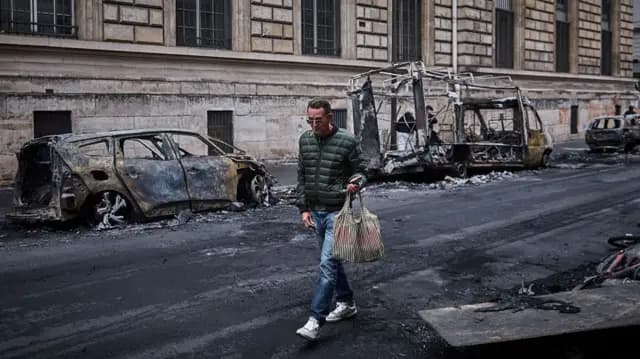
French Prime Minister Sébastien Lecornu has granted local authorities the power to implement partial curfews as the country grapples with a wave of intense civil unrest. The decision follows a weekend of widespread violence and looting that has left thousands of businesses damaged and prompted international concern.
Northern cities, including Lille, Douai, Wattignies, and Denain, are among the first to announce curfew measures, with restrictions set to run from 18:00 to 04:00 GMT. In the town of Coulaines, Mayor Christophe Roullion has imposed a curfew specifically targeting minors, prohibiting them from being outdoors after 23:00 local time. Meanwhile, Marseille has implemented an emergency ban on public gatherings in response to the chaos.
Prime Minister Lecornu, who has stopped short of declaring a national state of emergency, stated that the government would not be intimidated by the violence. "We will not be dictated and ruled by the breakers, by the thieves, by the thugs," he declared. He further alleged that the unrest is being orchestrated by "ultra-left radical groups" aiming to destabilize the country ahead of the 2027 presidential elections. This claim has been challenged by left-wing presidential candidate Jean-Luc Mélenchon, who demanded that the Prime Minister provide evidence for the accusation or apologize.
The economic impact of the riots is significant, with the French Chambers of Commerce and Industry reporting that approximately 2,000 businesses have been directly affected. In Marseille alone, business leaders estimate that over 600 shops were looted during the weekend. In response to reports that stolen goods are being offered for sale online, the resale platform Vinted confirmed it is actively removing listings linked to the looting and cooperating with law enforcement.
Data from the Armed Conflict Location and Event Data project (Acled) describes the current wave of protests as "exceptional," noting that the frequency and intensity of the confrontations exceed previous periods of unrest. While the demonstrations began last month as protests over school conditions, they have since expanded to encompass a broader range of grievances. Social media analysis by the BBC suggests that early calls for the protests were amplified by online accounts, with some content utilizing AI-generated imagery to spread misinformation.
As the government attempts to restore order, Interior Minister Laurent Nuñez remains in his post after President Emmanuel Macron declined his offer to resign. Prime Minister Lecornu has pledged to establish a fund to support affected businesses and indicated that the government intends to introduce legislation to ensure those responsible for property damage are held financially liable. Several nations, including China and Germany, have issued travel advisories urging their citizens in France to exercise caution and avoid areas affected by the demonstrations.

