
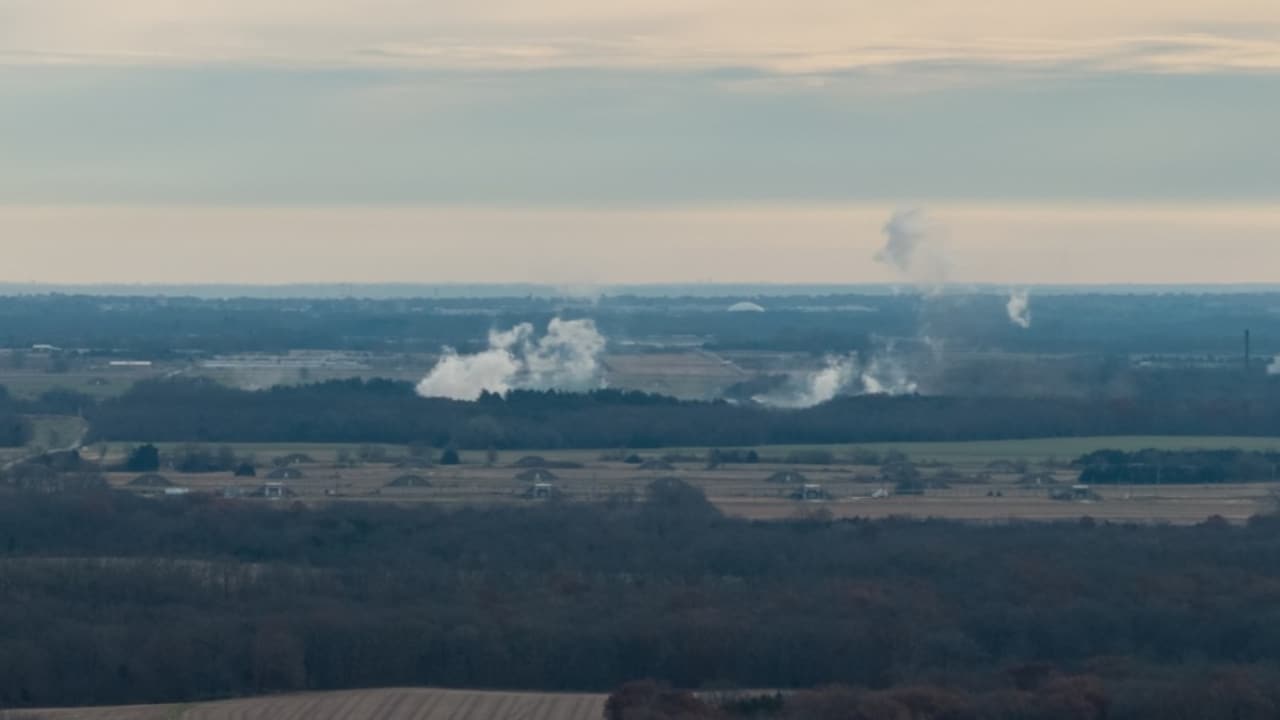
The US Army conducted a controlled detonation of nearly five tonnes of ageing lead azide explosives at the Iowa Army Ammunition Plant in Middletown on Wednesday. The operation was initiated to destroy highly volatile chemicals that had been stored in bunkers for over two decades, as officials deemed the material too unstable to move safely. Residents within a five-mile radius were previously advised to evacuate or shelter in place to avoid potential exposure to toxic lead dust.
Following the blast, which produced visible plumes of smoke, President Donald Trump stated that initial reports indicated the Army's mitigation efforts exceeded expectations. Despite the military's goal of zero toxic release, concerns persist regarding the potential dispersal of lead particles across the surrounding farmland. Government agencies and NASA are currently monitoring the area and analyzing satellite imagery to assess the environmental impact.
Authorities had implemented strict safety protocols, including door-to-door notifications and instructions for residents to seal their homes and deactivate heating systems. While the Army continues to monitor the site, officials have yet to confirm the total amount of hazardous material successfully contained during the explosion. Further updates are expected as independent researchers and government agencies evaluate the long-term safety of the region.