
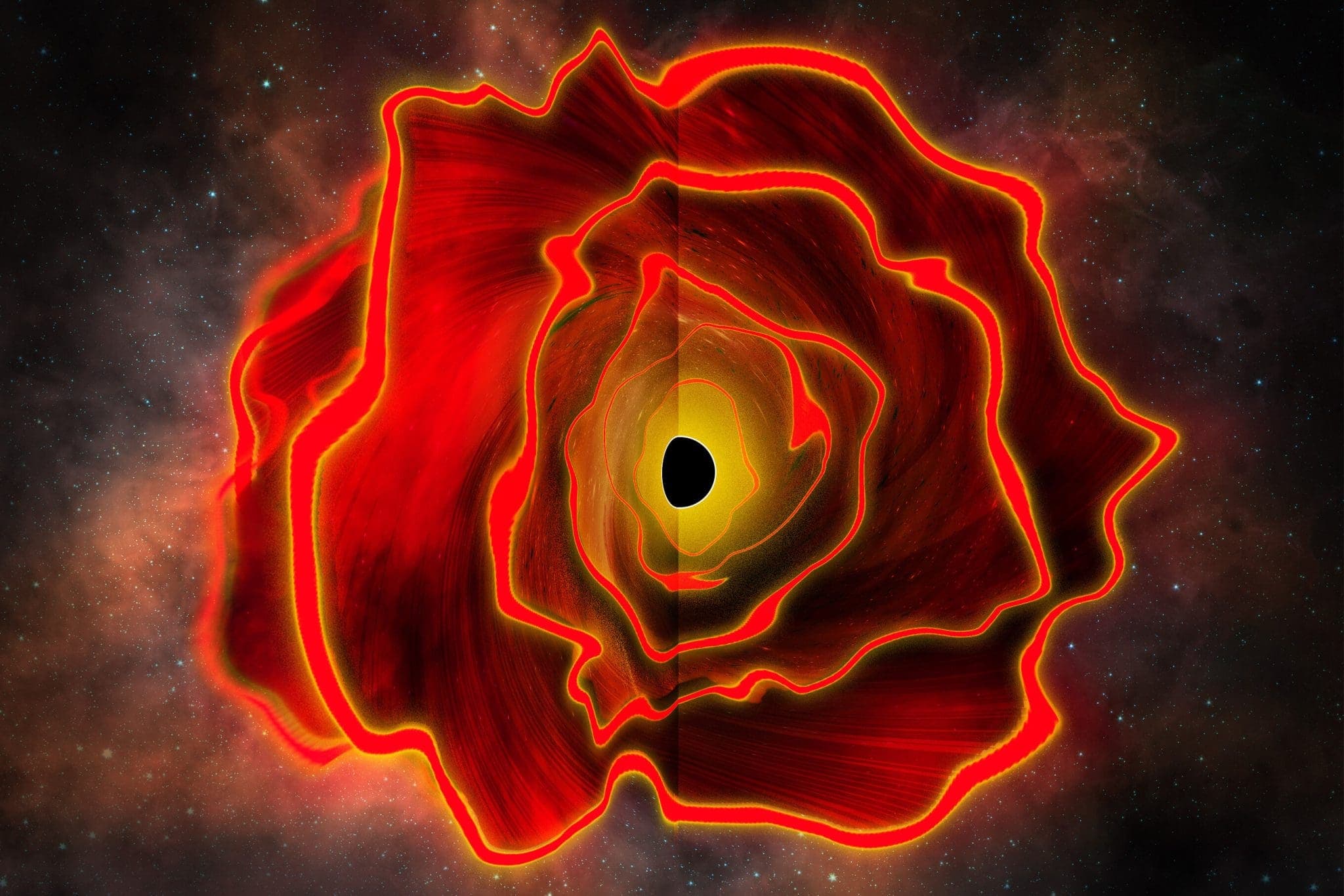
Astronomers using the James Webb Space Telescope have identified a new type of astrophysical object, dubbed a "black hole star," dating back to the early universe. The object, identified as MoM-BH*-1, appears as a bright red dot and is theorized to be a massive central black hole surrounded by a dense, solar-system-sized envelope of hydrogen gas.
Unlike standard stars powered by nuclear fusion, this object generates extreme brightness through its central black hole, which researchers estimate is 100,000 times as massive as the sun. The discovery was prompted by the observation of a significant "Balmer break" and a lack of metallic elements, which ruled out conventional stellar origins.
Lead author Rohan Naidu and his team suggest that these "little red dots" are common in the early universe. While most are obscured by their host galaxies, MoM-BH*-1 is uniquely bright, allowing scientists to observe the light emitted directly from the black hole star itself.