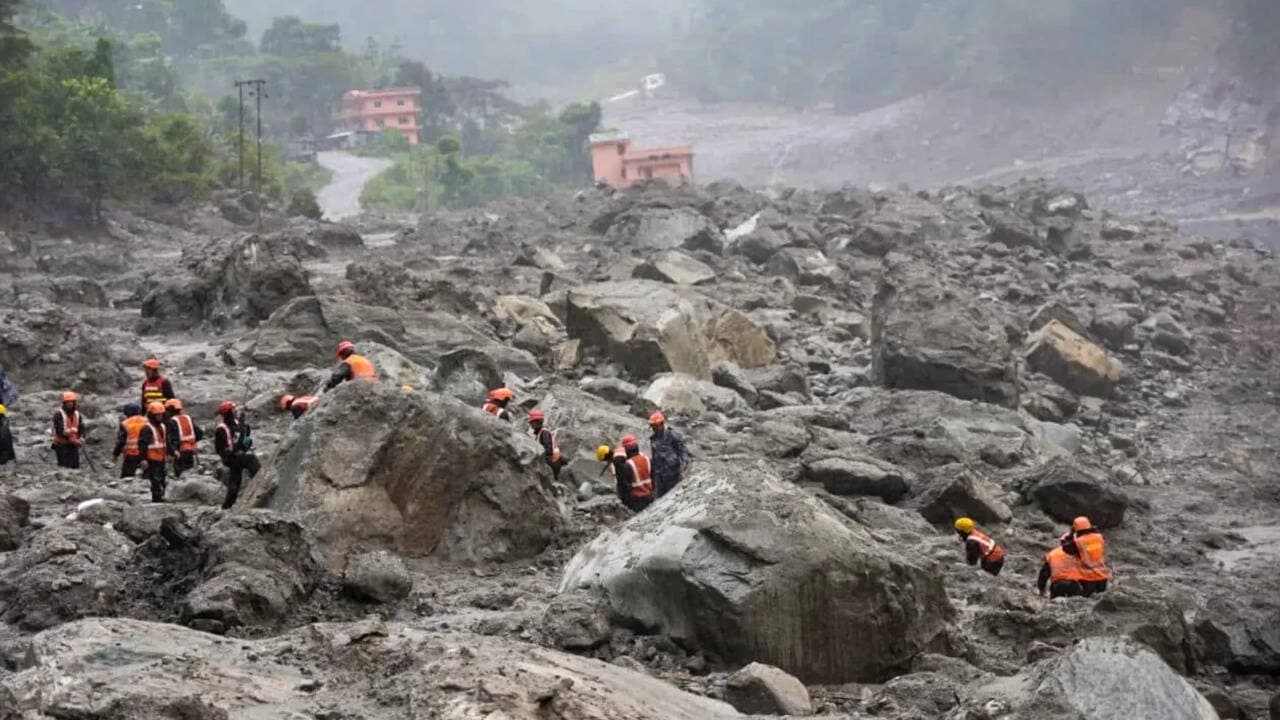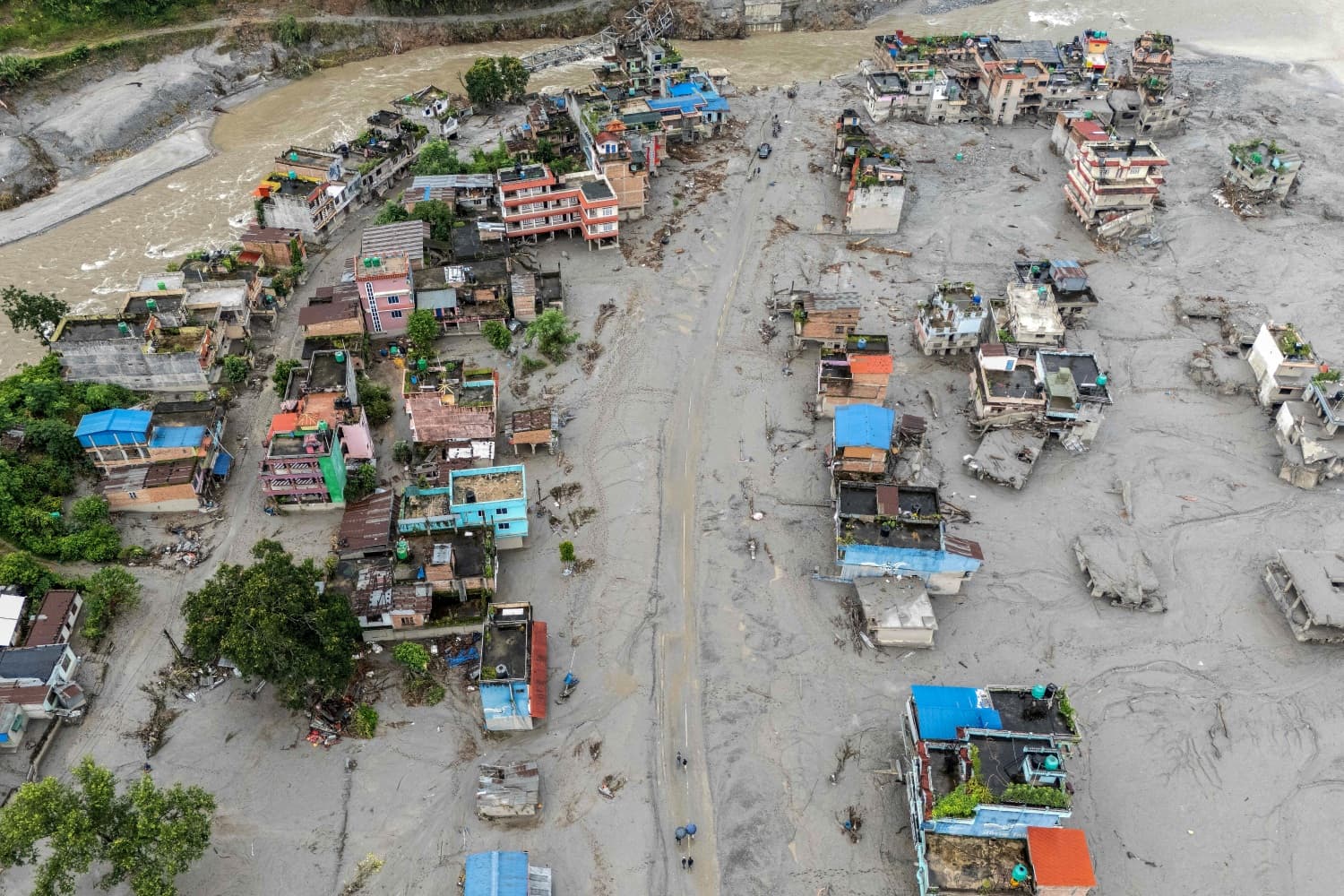
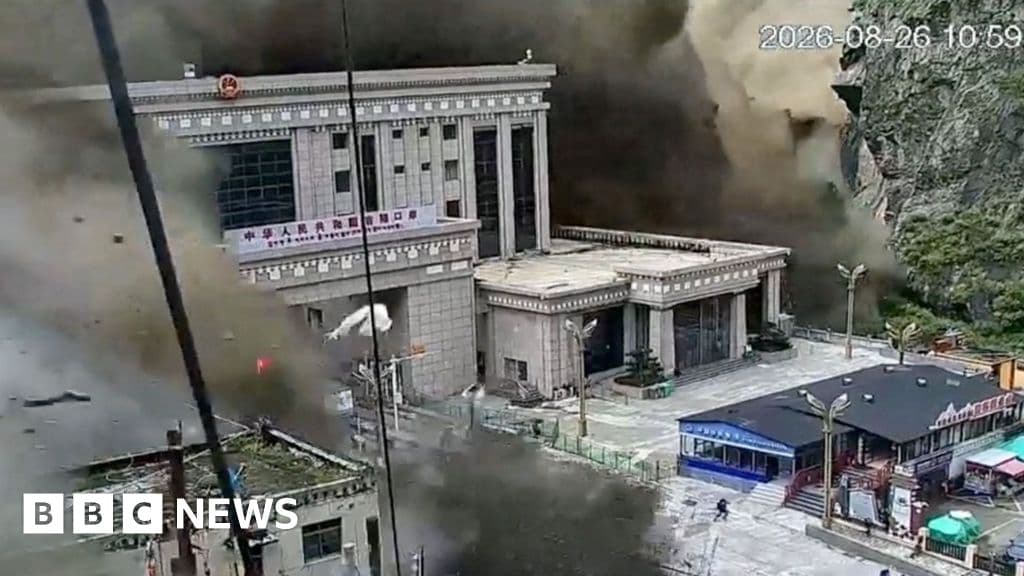
The dramatic footage was almost impossible to miss. A torrent of water tearing through Gyirong Port, one of the main border crossings between Nepal and Tibet, sweeping away all in its path as hundreds of people fled for their lives.
The scenes, captured by CCTV cameras, quickly spread on social media and onto screens around the world.
Except here, in China.
Only a single still-frame shot has been broadcast so far by the country's state-run flagship news bulletin.
It has also been difficult to find the full video on China's heavily censored internet. Although various aspects of the disaster have been discussed online.
But what is even harder to find is any first-hand accounts of survivors describing the flash flooding that has claimed hundreds of lives, with just as many still unaccounted for since Wednesday
Beijing has launched a massive rescue operation involving hundreds of emergency workers, which is continuing, and President Xi Jinping chaired an emergency meeting with officials to co-ordinate efforts.
Tibet, which Beijing annexed in the 1950s, had long resisted rule by the Chinese Communist Party.
As a journalist who has covered North Korea, it has often been easier for me to contact interviewees in Pyongyang than it is in the Tibetan capital, Lhasa said BBC journalist.
On Thursday night, as global headlines led on the devastation in a Himalayan valley, China's state broadcaster opened its main bulletin with the launch of Xi's new book, a selection of his "most important and fundamental works".