
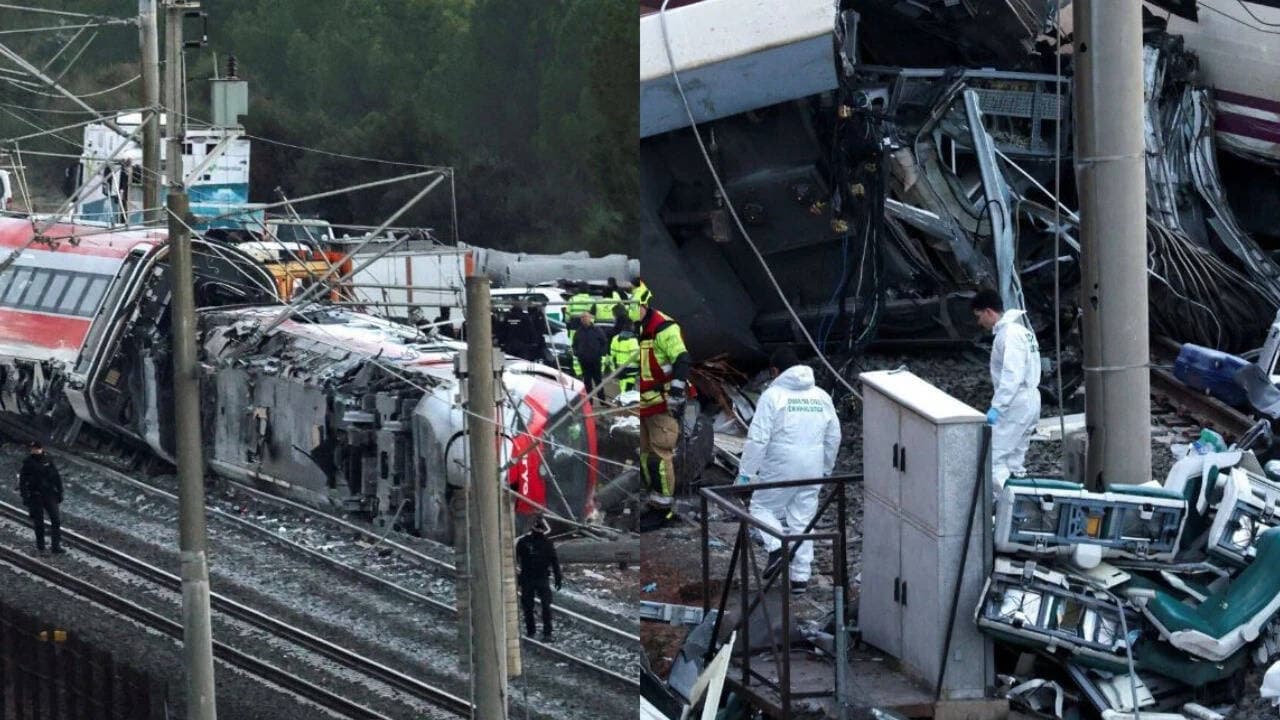
A collision between two high-speed trains in Spain’s central Toledo province has resulted in at least 50 deaths, with authorities warning that the casualty count may increase as rescue efforts continue. The incident occurred on Wednesday morning near the town of Urda at kilometer marker 118, involving an AVE train and an Iryo train on the Madrid-Seville line.
Preliminary government assessments suggest that a failure in the main automated signalling system forced a transition to manual control, leading to what officials described as a "possible human error" by an Adif operator. Government sources told the publication Okdiario that the accident occurred after the automated safety system failed, necessitating human intervention. Investigators are now working to determine the exact sequence of events, including why one of the trains appeared to be stationary on the tracks at the time of the impact.
Regional government spokesperson Esther Padilla confirmed the collision, noting that the Iryo train was carrying 146 passengers and an infant, while the AVE train had 397 people on board. The impact caused several carriages to derail and slide down an embankment. A passenger in one of the rear cars described feeling a "strong impact" approximately 40 minutes into the journey.
Experts have pointed to potential issues with the LZB Level 2 signalling system, an older technology installed when the Madrid-Seville line was constructed in the 1980s. While rail infrastructure operator ADIF is currently in the process of upgrading the line to the modern ERTMS Level 2 system, officials have yet to clarify the specific nature of the signalling breakdown or the actions taken by the operator.
Prime Minister Pedro Sánchez expressed his condolences, stating: "Emergency services are working on the ground to assist those affected and ensure their safety, in coordination with all the involved administrations. My affection, solidarity, and support to all the victims and their families." ADIF has suspended rail services on the affected routes to facilitate the ongoing emergency response.
This disaster follows a series of rail safety concerns in Spain. In January, a separate collision in the south of the country resulted in 45 deaths, marking the nation's most significant rail tragedy since the 2013 Santiago de Compostela derailment, which claimed 80 lives.