
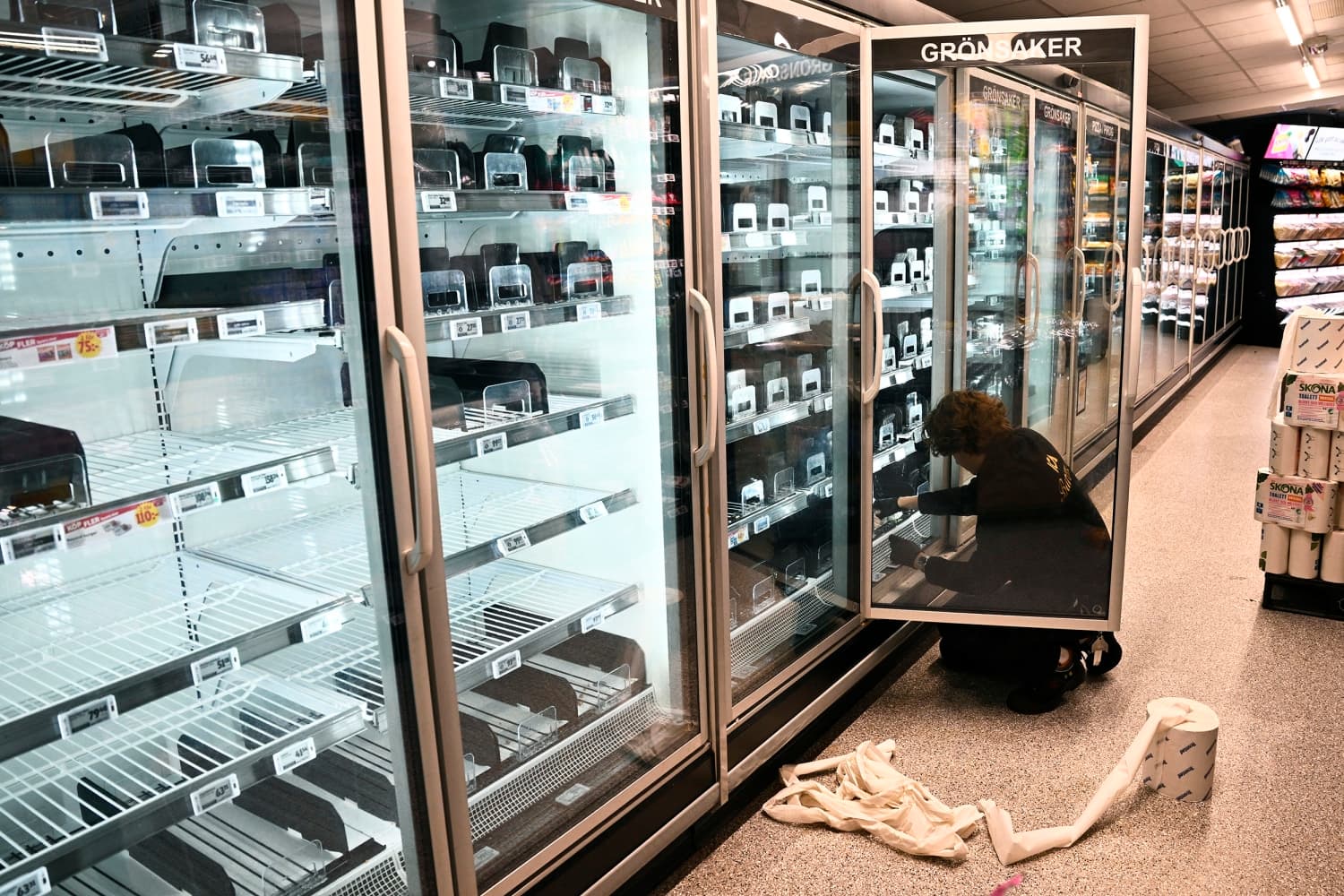
Supermarket chains across Europe are grappling with a wave of cyberattacks that have compromised refrigeration and freezer systems, causing significant temperature spikes. The incidents, which have affected stores in Belgium, Luxembourg, Sweden, and Estonia, follow a similar large-scale attack in France last month that resulted in food spoilage and fires after temperatures in cooling units were raised to 122 degrees Fahrenheit.
In Belgium, the Ahold Delhaize chain confirmed that its cooling systems experienced unauthorized temperature increases on Monday. Sarah De Meester, a spokesperson for the company, stated that an investigation is currently underway. Stephan Moelans, CEO of the refrigeration firm Sabcobel, which manages Delhaize’s systems, identified the event as a cyberattack in which evaporators were forced into defrost mode. Additionally, the Colruyt Group reported that five Spar franchise stores in Belgium were targeted.
Sweden has also seen multiple disruptions. John Billow, head of the nation’s cybersecurity center, confirmed that authorities are investigating several incidents involving grocery store refrigeration. One ICA store in Stockholm reported that its freezers were hacked at 2 a.m. and set to 50 degrees Celsius, a temperature level also recorded at an affected supermarket chain in Estonia. Kitman Coldtech, a technology supplier, confirmed the Estonian incident, with CEO Jann Mutso noting that the breach occurred on Tuesday morning.
Retailers are responding to the vulnerabilities of modern operational technology, which allows for remote monitoring of everything from security cameras to heating systems. ICA, a privately held group, acknowledged that a limited number of its stores were impacted, while the retail group Coop reported that six of its locations were affected. In the Netherlands, a retailer recently alerted police to suspicious activity within its infrastructure.
While no group has claimed responsibility for the recent wave of attacks, cybersecurity officials are urging retailers to prioritize system updates. “We have in recent weeks... identified that we have quite a lot of exposed operational technology devices in Sweden that we have been clear about the necessity to update or patch,” Billow said.

