
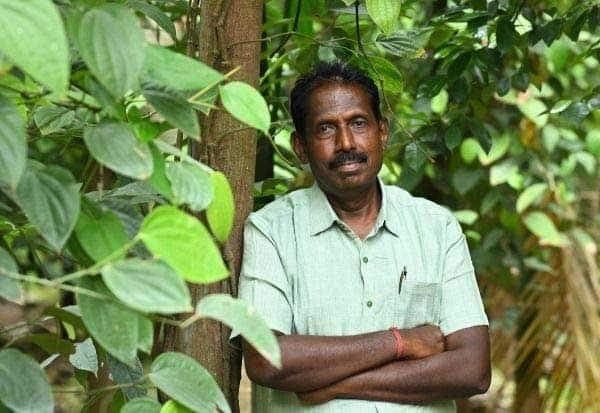
Coimbatore: Tamil Nadu and other southern states have the natural advantage to support farming throughout the year, says Valluvan, a natural farmer from Coimbatore who has received recognition from the United Nations.
According to him, the region has the right combination of sunlight, moderate rainfall, fertile soil, and favorable climate conditions. “Not many regions have the kind of natural farming environment that Tamil Nadu has. If we protect our soil and follow diversified farming methods, agriculture can become highly profitable and sustainable,” he said.
Valluvan, who hails from Vadavalli in Coimbatore, owns a farm near Vettaikaranpudur in Pollachi. In 2007, the organic carbon content in his soil was just 0.5 percent. Through natural farming practices and soil conservation methods, it has now increased to 3.36 percent. His work in improving soil health earned him global recognition from the Food and Agriculture division of the United Nations.
From Losses to Sustainable Income
Valluvan started coconut farming in 2006. In the beginning, the returns were not profitable. A coconut tree would yield around 110 coconuts on average, but the cost of maintaining each tree was high. With low market prices, the income was not enough to cover expenses.
To find a solution, he began reading the works of organic farming expert Nammalvar. He later understood that traditional Tamil farming was based on multi-crop and multi-layer farming systems. However, many farmers had shifted to single-crop farming in recent years, making them vulnerable to price crashes, pest attacks, and climate changes.
He realized that relying on a single crop was one of the major reasons for agricultural losses. A diversified farming system, he says, can protect farmers from market fluctuations and environmental risks.
Improving Soil, Increasing Income
Valluvan adopted tree-based multi-layer farming on his land. Leaves and organic matter from trees were used as natural mulch. Cow dung and cow urine from native cattle were diluted, filtered, and supplied through drip irrigation.
These practices gradually improved the fertility of the soil. Earlier, earning Rs.30,000 per acre was considered a big achievement. Now, according to Valluvan, the income from the land has increased nearly tenfold.
Global Recognition for Soil Conservation
Valluvan submitted his soil improvement results to the United Nations. His work received third place at the global level for soil conservation and sustainable natural farming.
His farm now has more than 9,000 timber trees and over 2,000 coconut trees. Various fruits, vegetables, greens, and intercrops are also cultivated. Because of the dense tree cover, the temperature inside the farm remains around 3 degrees Celsius lower than outside areas.
This cooler microclimate has helped him grow crops such as pepper, coffee, and nutmeg. The improved soil health has also helped the farm withstand drought conditions, while pest attacks such as whitefly infestation have reduced.
Tree-Based Farming Is the Need of the Hour
Valluvan believes that tree-based farming is no longer optional but essential. Rising carbon emissions and declining air quality have created serious environmental challenges. Increasing tree cover in farms can help improve oxygen levels, protect soil health, and reduce the impact of climate change.
“South India has the natural system to support farming for all 365 days of the year. Tamil Nadu has the drainage structure, sunlight, rainfall, and soil conditions needed for sustainable agriculture. Farmers must return to multi-crop and tree-based farming to protect both their income and the environment,” Valluvan said.
His success story shows that natural farming, soil conservation, and diversified agriculture can turn loss-making farms into sustainable and profitable models.
Agri News
Tamil Nadu Has the Potential to Farm 365 Days a Year: Natural Farmer Valluvan
Published: