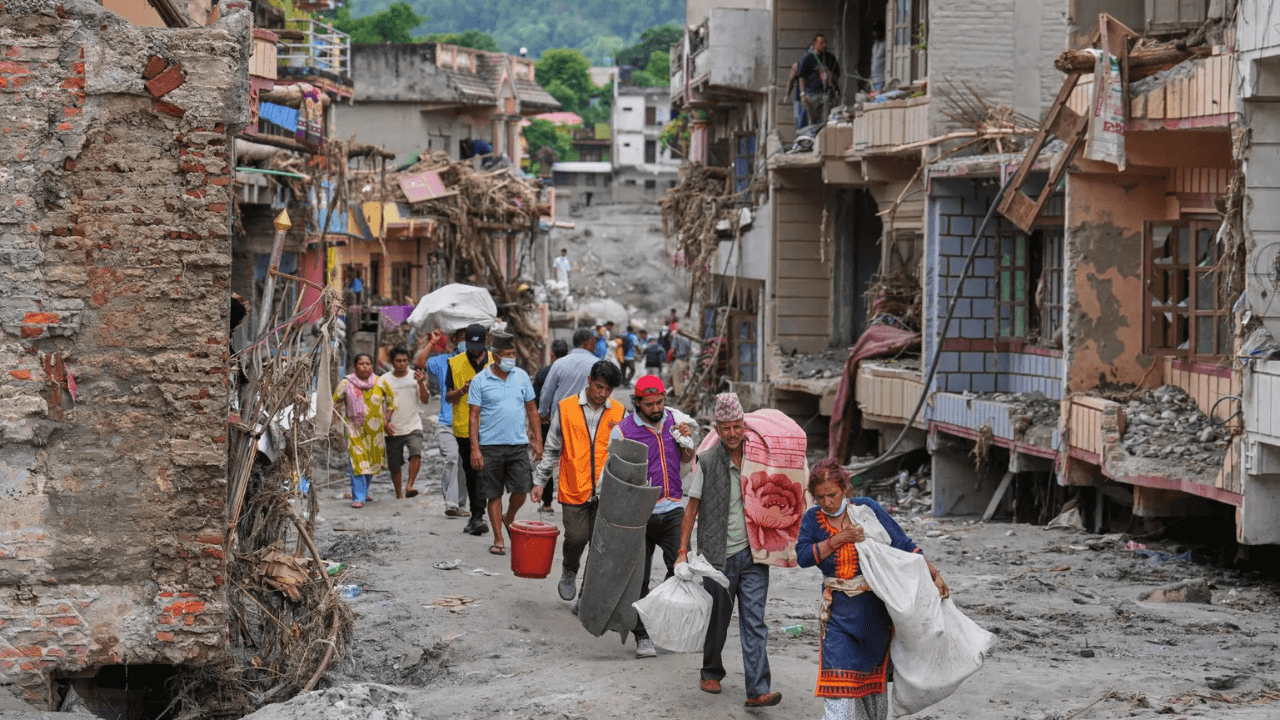
Nepal is scaling up rescue and recovery operations following catastrophic flash floods along the Nepal-Tibet border that have claimed at least 1,200 lives in Nepal and 21 in Tibet. Thousands of people remain missing, including hundreds of foreign nationals, while rescue teams work to reach those potentially trapped in hydropower tunnels and remote villages. The United Nations reports that the primary challenge remains access, as more than 40 bridges have been destroyed, leaving many communities reliant on helicopter aid.
Nearly 12,000 people have been rescued, but approximately 3,500 individuals are currently displaced in overcrowded shelters, raising concerns about disease outbreaks during the monsoon season. Nepal’s government has declared a three-month disaster period in 15 affected areas to facilitate financial assistance and the relocation of survivors. Prime Minister Balendra Shah emphasized that the disaster was beyond predictable forecasts, though experts suggest that improved early-warning systems could have mitigated the impact.
Attributing the disaster to the escalating risks of climate change, Prime Minister Shah called for greater international responsibility in managing such environmental threats. In response to the crisis, the Nepalese government and the United Nations have launched a four-month humanitarian flash appeal. Meanwhile, Chinese rescue teams continue to clear debris and utilize drones to search for survivors near the Gyirong Port border crossing.