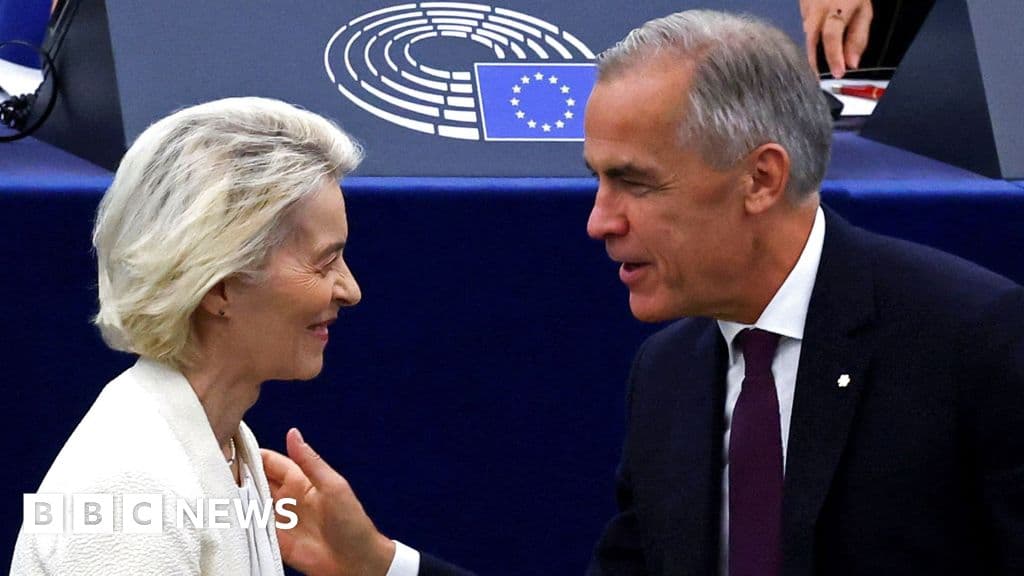
European Commission President Ursula von der Leyen has signaled support for a new "associate member" status for Canada, aiming to deepen ties across critical sectors. During her State of the Union address in Strasbourg on Wednesday, von der Leyen told the European Parliament that she intends to "open the door" for Canada, emphasizing that such a partnership would be built on shared democratic values and common strategic interests.
"Partnerships are a strategic choice for Europe. But they also respond to the fracture in the international rules-based system," von der Leyen stated. She clarified that the proposal is not intended as a move against any other nation, but rather a step toward bolstering collective strength. Canadian Prime Minister Mark Carney, who attended the address, has previously advocated for a "unique alliance" with the bloc as Canada navigates strained trade relations with the United States.
While the specific framework for this associate status remains undefined, the Commission President identified manufacturing, technology, artificial intelligence, energy, critical minerals, and economic security as primary areas for cooperation. However, the proposal faces potential hurdles; the concept of associate membership does not currently exist within EU law, and some member states may prefer to expand existing trade and defence agreements rather than pursue a new institutional status. Notably, a decade-old free-trade agreement between the EU and Canada still awaits ratification by ten of the bloc's 27 member states.
In the same address, von der Leyen proposed the creation of a European Security Council to address continental risks, particularly in light of the ongoing conflict in Ukraine. The council would include partners such as Canada, the United Kingdom, and Ukraine. She described the initiative as a "mechanism to flank" NATO's Article 4, intended to facilitate emergency consultations when member security is threatened. She stressed that the EU remains committed to strengthening its work with NATO and that increased defence spending would be fully aligned with the alliance.
Beyond security and international partnerships, the Commission President outlined a broad policy agenda for the coming year. This includes initiatives to reduce business bureaucracy, engage with major AI laboratories, and implement stricter regulations on social media for minors, including potential bans for children under 13. Additionally, she introduced a new emergency tool designed to manage mass migration, following recent incidents at the Spanish enclave of Ceuta. While von der Leyen insisted the tool would be subject to strict criteria and human rights protections, the proposal has drawn concern from advocacy groups regarding the potential treatment of asylum seekers.