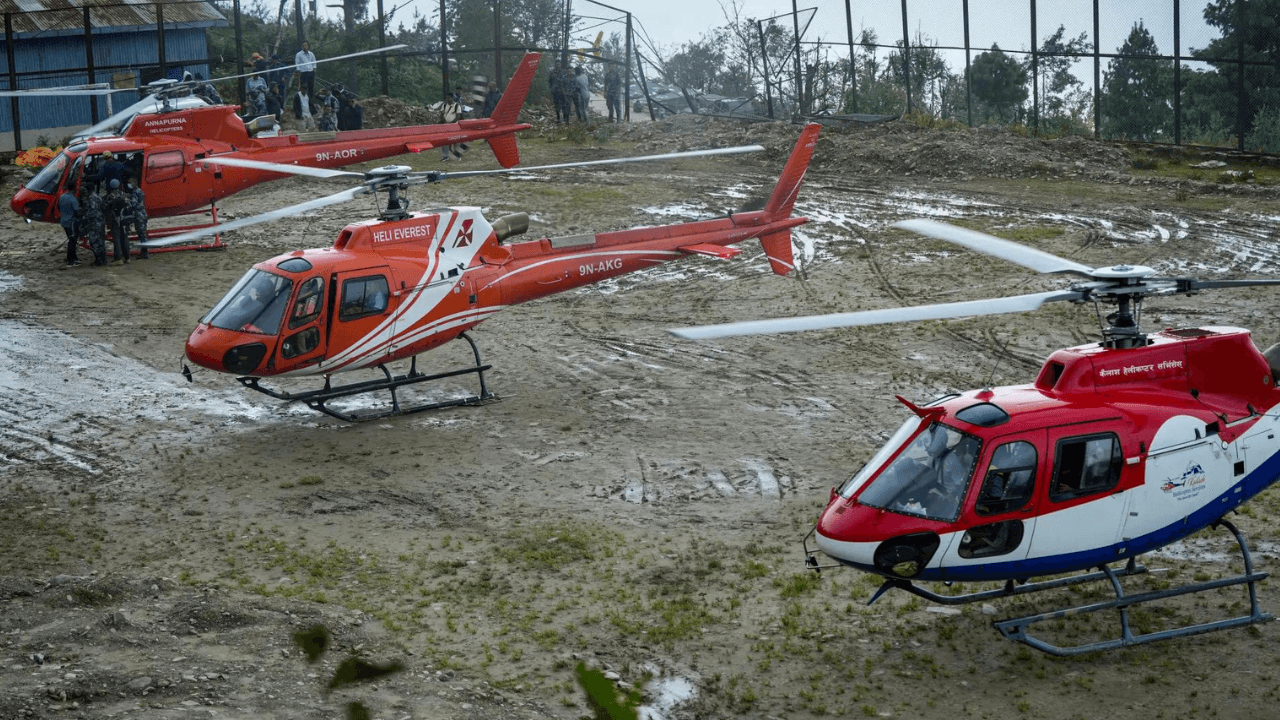
Helicopters have airlifted over 4,000 people from the flood-ravaged Rasuwa and Nuwakot districts following the August 26 Bhote Koshi-Trishuli disaster. Officials described the mission as potentially the largest rescue operation in Nepal's history, as severed roads and bridges left air transport as the only viable lifeline for survivors.
Pilots reported that navigating the narrow gorge was more challenging than Everest-season flying due to unpredictable conditions, including missing landing sites and inaccurate coordinates. With no formal airport in the affected region, crews operated in uncontrolled airspace, establishing their own safety protocols to manage the high volume of traffic between Trishuli and the Tibet border.
Operations faced additional hazards from unauthorized drones and frequent false rescue alerts that diverted critical resources. Civil aviation authorities and emergency officials noted that these complications, alongside the evolving nature of the mission from medical evacuations to relief drops, significantly strained the ongoing rescue efforts.